Dick Allen Enters Hall of Fame as Phillies and Friends Who Pushed His Case Look On
Allen, who refused to lobby for Cooperstown before his death in December 2020, was inducted Sunday after a campaign carried by a groundskeeper, an author, a filmmaker, a teammate and the Phillies' owner.
By Aever Bundji ·
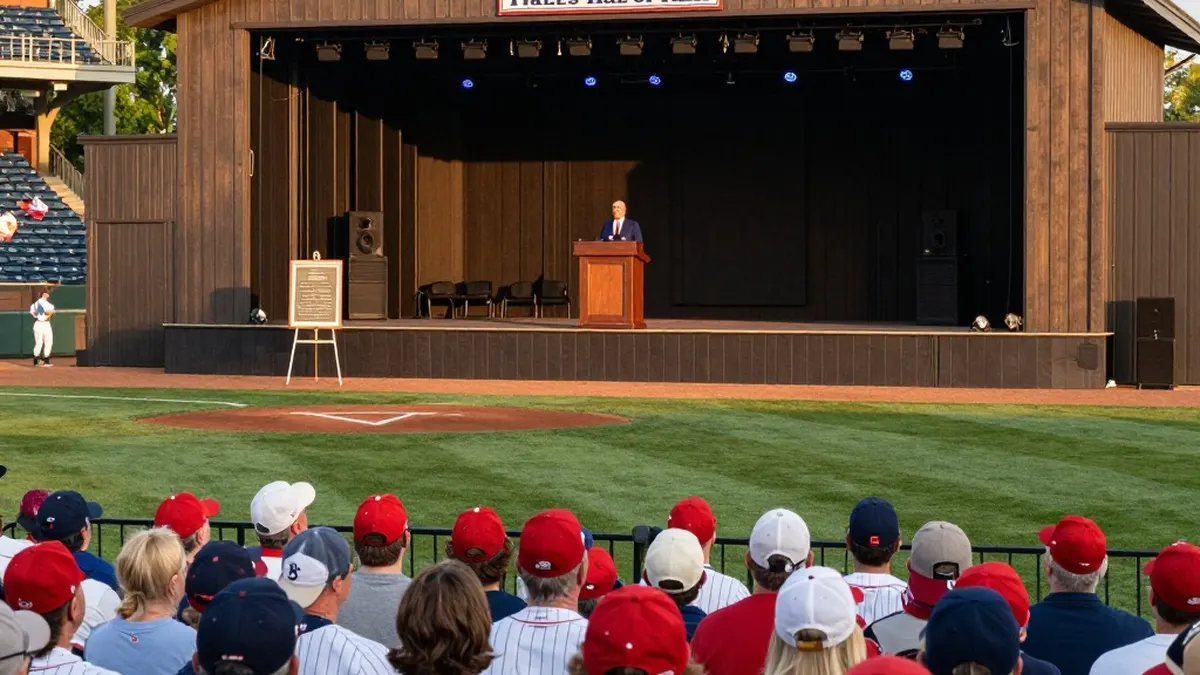
Dick Allen was inducted into the Baseball Hall of Fame on Sunday, ending a wait that his admirers in Philadelphia had come to regard as personal. Allen died in December 2020 after declining to campaign for Cooperstown himself, so a group of supporters did the work for him.
At a Saturday night celebration hosted by the Phillies, owner John Middleton said Allen's numbers were never the obstacle. Allen hit 351 home runs and posted the second-highest OPS in the majors from 1964 to 1974, figures that were the same when he retired in 1977 after about ten weeks with Oakland, a stint in which his jersey read WAMPUM, the name of his small Western Pennsylvania hometown, instead of his surname. "It foundered on the question of his character," Middleton said of the long-running candidacy, adding that it made this induction different from the six others he had attended.
The reputation Middleton believed held Allen back, that of a clubhouse cancer who was lazy and angry, was one Allen did not care to challenge. Others stepped in. Mark Carfagno, a former Veterans Stadium groundskeeper, began a campaign, and Bill Kashatus wrote books. Filmmaker Mike Tollin started making a movie, Mike Schmidt spoke publicly about his former teammate, and Middleton had No. 15 retired at Citizens Bank Park.
Tollin, who grew up in Havertown, rejected the image created in Allen's playing days. "Does he have an angry bone in his body?" he asked, describing Allen as kindhearted, humble, generous and compassionate.
Allen's first Philadelphia chapter was marked by hostility. He endured racial slurs from the crowd, had a rock thrown through his living room window, received death threats and wore a batting helmet in the field to guard against bottles thrown by fans. After he kissed the dirt at Connie Mack Stadium, his wish to be traded was granted. His Hall of Fame plaque cites a 1964 National League Rookie of the Year award, a 1972 American League MVP season with the White Sox, seven All-Star selections, and two home run titles.
He returned to the Phillies after Richie Ashburn, then a team broadcaster, learned Allen was weighing a comeback following the 1974 season. Ashburn brought Schmidt and Dave Cash to Allen's farm in Perkasie, where they played H-O-R-S-E in the barn. Schmidt recalled that Allen's only question was whether the team's inner circle truly wanted to win. Schmidt said Allen's first at-bat back drew a standing ovation, which he took as the fans' apology.
Allen's influence extended to the clubhouse. He hosted team dinners on the road and helped Garry Maddox believe in himself. In 1976, with Schmidt slumping, Allen told him to smile more and have fun, and Schmidt said he hit four home runs and went 5-for-6 in the game that followed.
Tollin became close to Allen, and in spring 2020 he told Middleton that Allen had cancer. The Phillies retired No. 15 that summer, earlier than the club's custom of waiting for a Cooperstown election. Allen, too ill to read a prepared speech, spoke off the cuff, thanking fans who believed in him and saying he hoped he had proved he belonged. Middleton said Allen thereby "gave everyone absolution," leaving no bitterness behind.
In her Hall of Fame speech Sunday, Allen's widow, Willa, recalled that when told of the number retirement, Allen asked, "What number?" and then simply offered quiet thanks. Tollin said Allen would have responded to the plaque with humility, saying something like "Man, oh man."
Source: The Philadelphia Inquirer