Optimus Ramp Targets 10,000-20,000 Robots for AI Training
Tesla plans to use a dedicated fleet of its humanoid robots to generate the training data its vehicles cannot provide.
By Jasmine Coleman ·
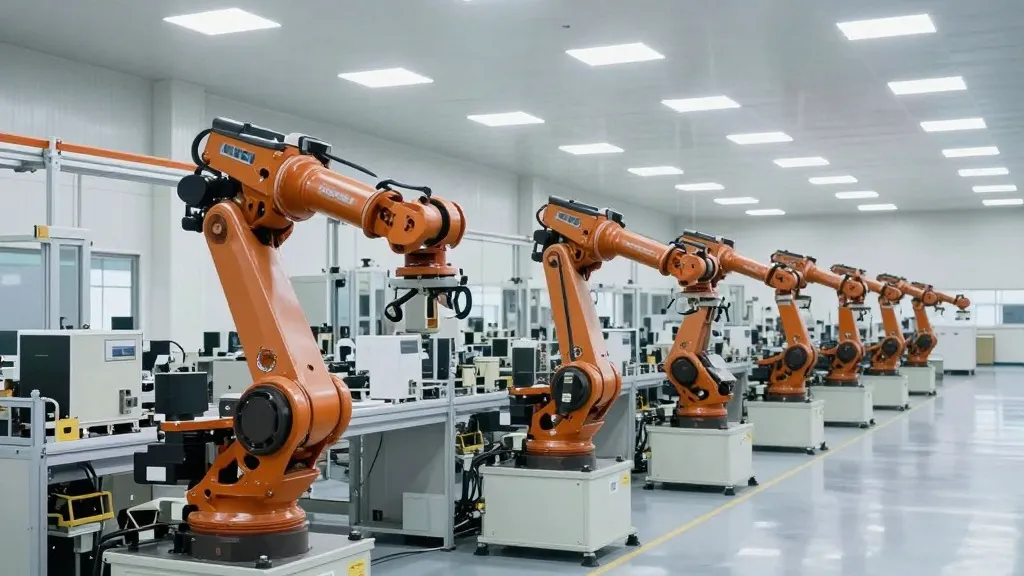
Tesla is moving its humanoid robot program onto a high-volume production line, the company said in its third-quarter shareholder letter, declaring the first units manufactured there as production-quality devices suitable for commercial product. The manufacturing setup for Optimus is now validated for a commercial product, the company stated.
The new line is housed in the Fremont factory space that previously built the Model S and Model X. That vehicle manufacturing equipment was cleared out in 46 days earlier this year to accommodate robot production geared for an annual output of one million units. During Wednesday's earnings call, Elon Musk indicated that most equipment for that capacity is already in place at Fremont, with the line now set to ramp toward roughly 20,000 robots a week. Musk characterized the ramp as a classic S curve, noting, "The growth of Optimus is an S curve, but the initial curve is a shallow slope."
Tesla intends to use this new production capacity to create a large-scale training data source for its robotic intelligence. Unlike the company's vehicle fleet, which provides real driving data from millions of cars to the AI team, the robot program has not had a comparable data stream. Musk said, "A big difference with Optimus versus the cars is we don't have this vast fleet of cars from which we can gather training data." The company's solution is the creation of an Optimus Academy, where 10,000 to 20,000 robots will practice a wide range of tasks to generate information for the next version of the model. Every unit produced on the Fremont line will contribute to this data pool.
Musk expects the current work on the robot's AI, electromechanical design, and reliability to be finished by the end of next year. Deliveries to outside companies are planned for that period, targeting dangerous, repetitive, and around-the-clock jobs. The company also intends to install its AI5 chip in Optimus next year and will soon release a video showing the robot performing tasks driven by AI rather than preprogrammed motions. Tesla executives added that the manufacturing costs for Optimus are trending toward the expected cost for the Cybercab, indicating the robot is engineered for volume production from the start. The hands remain the most difficult part of the design, where much of the current engineering effort is focused.
Source: Teslarati